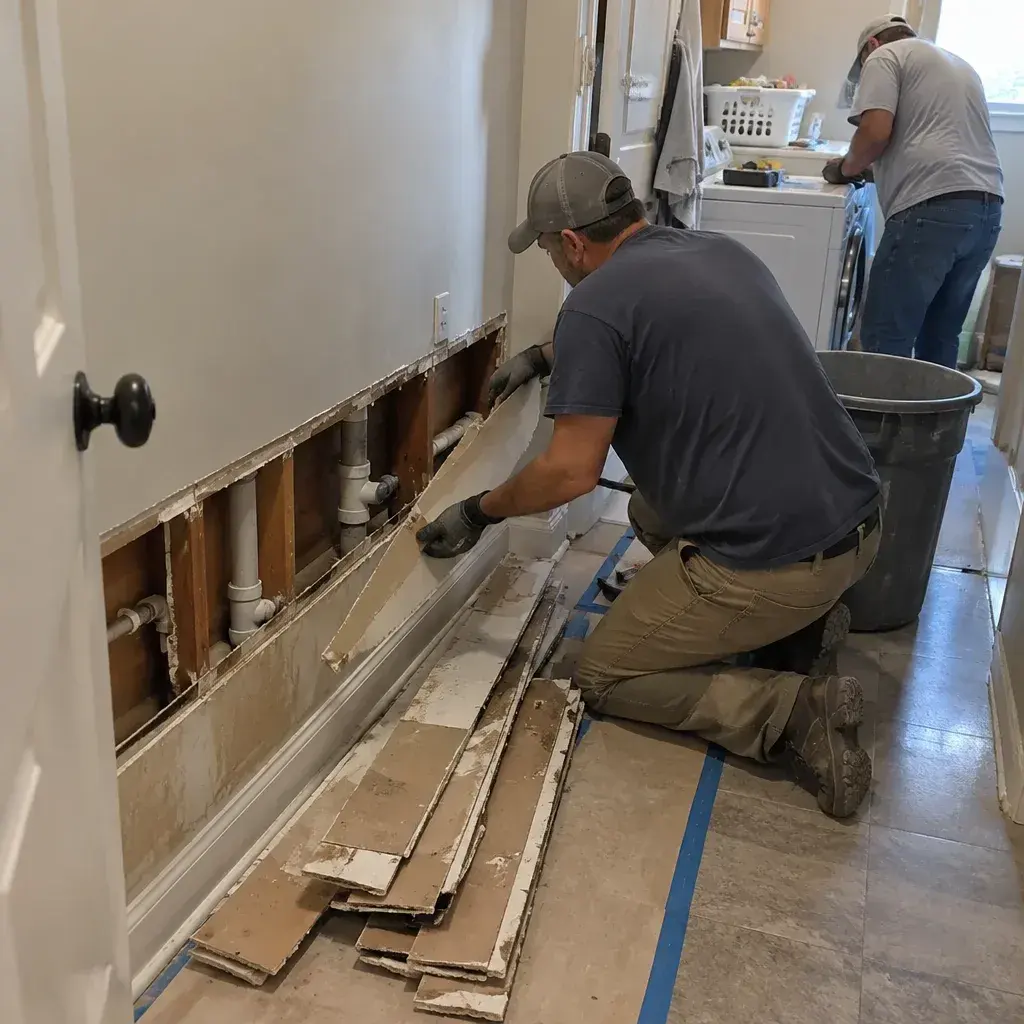
Shifting Loads Around Pipe Joints
In Kentucky, cold can reach water lines routed through unheated spaces. Water that freezes expands and can stress a rigid PVC wall. Insulation and pipe placement affect exposure, so a freeze is one possible cause, not proof of why a particular line split.
Kentucky’s statewide settings include Kentucky Dam Village State Resort Park, South Shore Wildlife Management Area, and General Burnside Island State Park. Those landmarks do not reveal a home’s pipe route or condition. A concealed supply line may leak into a floor or wall before water reaches view.
Calls come from Kentucky homes where a wet ceiling or wall may be the first visible clue. Ongoing moisture can weaken nearby building materials and damage finishes.
Finding Breaks Behind Finishes
- LINE USE
- Pipe markings and line use help show whether the installed PVC is intended for pressurized water.
- CUT LENGTH
- The replacement piece and fittings must suit the existing pipe’s diameter and joining method.
- PIPE CONDITION
- A short cutout can work when undamaged pipe remains beyond the break for secure joints.
- CEMENT CURE
- After the joints cure, the plumber checks them under pressure and confirms water can flow.
- LEAK CHECK
- Across Kentucky, addresses may be described by landmarks such as My Old Kentucky Home State Park, Saunders Springs Nature Preserve, or Lake Cumberland State Resort Park; the PVC line’s use and condition guide the cut, cure, and leak check.
- REPAIR SCOPE
- Kentucky frost and freezes can expose water lines in unheated spaces to freezing conditions. Frozen water expands and may stress rigid PVC; a split can become apparent during a cold spell or later. Seasonal conditions alone cannot show what caused a particular break.
- REPAIR CHOICE
- an estimated $275–$1,100
Warning Signs on a Pressurized Water Line
CPVC water pipe can resemble PVC because both are rigid plastic. Their markings and approved uses differ, so appearance alone cannot establish which system is installed. Check the legend or ask a plumber to identify it before selecting repair parts. Check the printed legend on an accessible pipe and note the fitting style. Color alone cannot confirm its material or intended service. A plumber can compare the marking with the line’s use and determine whether the PVC is suitable for pressurized water.
Matching Parts to the Existing Line
The plumber first identifies the PVC markings, line use, and connection style. They follow the wet area, expose enough pipe to inspect the break, and check how far cracking extends. If safe to operate, the supply is shut off before the damaged section is assessed.
For a confined break, the plumber cuts out damaged PVC and joins a compatible replacement piece and fittings by the system’s specified method. If cracking continues or sound pipe is unavailable, a longer section may be needed. After curing, the plumber restores flow and checks the joints under pressure.
In Kentucky, a single visit can resolve a contained break when the plumber can reach it, fit the repair, and check for leaks. If the surrounding line also shows damage, ask for its location and proposed next step. Ongoing inspection is useful only when the assessment identifies a reason to continue.
ONE-TIME BURST REPAIR COMPARED WITH RECURRING PIPE CHECKS
| Permit Factors |
Fit for Damage |
|---|
| Recently spotted supply leak | Water cleanup separate |
| Leak resurfaces months after pipe work | Post-repair leak check |
| Leaks scattered through one supply system | Damaged run renewed; supply confirmed |
SHAKER VILLAGE REPAIRSKentucky law establishes a State Plumbing Code and plumber licensing framework. The state’s plumbing guidance distinguishes leak repairs from specified installation work. Ask the professional to record the work performed and parts used on the invoice. This gives you a clear account of the repair if questions arise later.
Protecting People Before Repair Work
A supplied split can release water into a wall, ceiling, or floor cavity. Moisture may spread into insulation, framing, and finishes before a stain appears. The pipe repair addresses the leak; extraction, drying, and rebuilding may need separate providers. Delayed drying can leave more materials affected.
Find the Home’s Water Shutoff
From a dry, safe spot, note where water appeared and photograph visible pipe markings without moving walls or stored items. Turn off the supply only if its valve is safely reachable. Keep people away from wet electrical areas. Leave cutting, joining, and pressure checks to a plumbing professional.
Checking the Line Before Reuse
Water can reach outlets, appliances, or wiring and make a room unsafe. Keep clear of wet electrical areas; do not touch wet devices. Shut off the supply only if you can safely reach and operate the valve. If you cannot, stay away from the hazard and seek appropriate help. Pipe repair does not include drying or rebuilding damaged surfaces.
Which Factors Shape the Repair Cost?
Once the leak is located, have the pros we connect you with explain how the damaged line and access needed affect your repair estimate.A leak beside Shaker Village of Pleasant Hill may be visible; one near General Butler State Resort Park may be concealed. The $350–$1,300 band concerns plumbing work on the reported break. If tracing reveals more damaged pipe, scope can change. Cleanup, drying, and rebuilding are separate. In Kentucky, ask the pros we connect you with to confirm visit charges and included work.pricing guide lays out possible charges and the details that move a final quote.